In this course, you will acquire the essential skills to perform the job as Computer User Support Specialist or IT Help Desk / End User Support Specialist. This course covers information students will need to install, upgrade, repair, configure, troubleshoot, optimize, and perform preventative maintenance of basic personal computer hardware, devices and operating systems.

Students are given real world scenarios to reinforce the material covered and will learn how to apply the concepts to their daily operations. IT Security Administrator Program teaches critical knowledge of communication security, infrastructure security, cryptography, operational security, and general security concepts. Because human error is the number one cause for a network security breach, CompTIA Security+ is recognized by the technology community as a valuable credential that proves competency with information security.
The Cyber Security Professional Associate Program is designed to prepare students for the constantly evolving realm of cybersecurity operations. Drawing from Cisco’s CyberOps Associate CBROPS (200-201) curriculum, this program offers a comprehensive introduction to the foundational principles and practices central to cybersecurity. Upon completion, students will be well-equipped to earn the Cisco CyberOps Associate certification and pursue a career in cybersecurity operations centers (SOCs).
Course Objectives:
- Provide a deep understanding of the role and responsibilities of an associate-level security analyst in security operation centers.
- Offer insights into the workings of cybersecurity operations and its importance in the modern digital landscape.
- Familiarize students with core knowledge and skills required to respond to cybersecurity threats and incidents efficiently.
The Data Analyst Professional Associate Program is a comprehensive training initiative designed to equip aspiring data analysts with the foundational and advanced skills required to thrive in the modern data-driven business world. This program leverages the robust curricula of Microsoft’s renowned certifications – the MTA Database Fundamentals, Microsoft Azure Data Fundamentals, and Microsoft-certified Power BI Data Analyst.
Course Objectives:
The primary objective of the Data Analyst Professional Associate Program is to comprehensively train and nurture participants to become proficient in data analysis by integrating foundational knowledge, cloud-based data solutions, and advanced visualization techniques. By leveraging the well-established frameworks of the MTA Database Fundamentals, Microsoft Azure Data Fundamentals, and Microsoft-certified Power BI Data Analyst, the program aims to:
- Equip Participants with Core Competencies: Enable learners to grasp the foundational concepts of databases, understand the nuances of cloud data solutions in Azure, and master the art of data visualization using Power BI.
- Provide Hands-On Experience: Offer an immersive learning environment through hands-on labs, real-world projects, and practical assignments to ensure participants can apply theoretical knowledge in actual business scenarios.
- Promote Career Advancement: Through this program, participants will earn three valuable Microsoft certifications, positioning them favorably in the job market and paving the way for numerous roles in the data analytics domain.
- Foster Continuous Learning: Encourage participants to remain curious, engage in lifelong learning, and stay updated with the ever-evolving data landscape.
Welcome to the AI Engineer Professional Associate Program. This immersive program is designed to provide participants with comprehensive knowledge, hands-on experience, and recognized certification in the dynamic field of Artificial Intelligence (AI). Incorporating the widely respected CertNexus Certified Artificial Intelligence Practitioner (CAIP) curriculum, this course empowers students with both the theoretical knowledge and practical skills required to excel as an AI Engineer.
Course Objectives:
- Foundational Understanding: Grasp the foundational concepts of AI, including its history, potential applications, and current real-world uses.
- Deep Dive into ML & DL: Delve deep into machine learning and deep learning techniques, understanding their mechanics, algorithms, and implementation.
- AI Ethics & Bias: Recognize and address issues related to ethics, fairness, and biases in AI.
- Practical Implementation: Engage in hands-on labs and real-world projects to apply AI solutions using popular tools and platforms.
- CAIP Certification Preparedness: Equip students with the requisite knowledge and practice to successfully clear the CertNexus CAIP exam.

Computer Systems Analyst / Office 365 Administrator Associate Program prepares you for a position as an Office 365 Network Systems Administrator, Software as a Service (SaaS) Administrator, Systems Engineer, and Cloud Engineer focused on managing Office 365 business productivity products like Exchange, SharePoint, and Skype for Business.
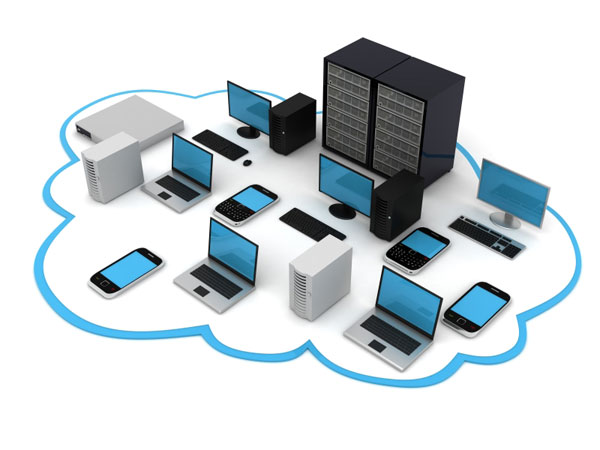
Students create, configure and connect to a SQL Database instance, importing a standalone database, manage users, groups and subscriptions in an Azure Active Directory instance, creating a virtual network, implementing a point to site network. Students learn how to describe Azure architecture components, including infrastructure, tools and portals, implementing and manage virtual networking within Azure and connecting to on-premises environments. Additionally, students plan and create azure virtual machines, configure webs apps and mobile apps, implement, manage, backup, and monitor storage solutions, implement data services based on SQL Database to support applications, manage Azure AD tenants, and configure application integration with Azure AD.
Microsoft Solution Expert Program Training – Cloud Platform Administrator will qualify you for such jobs as Network Systems administrator, systems programmer, and network manager.
Delve into the comprehensive Integrated Cloud Computing Professional Associate Program, meticulously designed to impart a profound understanding of cloud computing, network technologies, and their real-world applications. This course combines the curricula of CIW: Network Technology Associate, CompTIA Cloud+, and the Microsoft Azure Administration, making it an unparalleled training program for IT professionals, administrators, and anyone keen on mastering cloud and network technologies.
Key Course Components:
1. Intro to Network Technologies:
· Understanding the role of various network components and their functions.
· Basics of networking standards and protocols.
· Overview of network transmission, IP routing, and addressing.
· Network security concepts, threats, and best practices.
· Hands-on experience with network tools and diagnostic utilities.
· Internet services and cloud computing from a networking perspective.
2. Cloud Computing (CompTIA Cloud+):
· Introductory concepts and benefits of cloud computing.
· Deep dive into cloud models: IaaS, PaaS, and SaaS.
· Deployment types: Private, Public, Hybrid, and Community clouds.
· Cloud networking, storage solutions, and virtualization.
· Workload migrations, infrastructure management, and security in the cloud.
3. Microsoft Azure Administration:
· Comprehensive overview of Azure's vast services and capabilities.
· Mastery over managing Azure resources and subscriptions.
· Storage solutions, virtual networks, and virtual machines in Azure.
· Identity management through Azure Active Directory.
· Implementing and managing Azure's load balancers and traffic management.
· Azure security, monitoring, and troubleshooting.
Learning Outcomes:
Upon concluding this program, participants will:
· Attain a robust understanding of cloud computing models, network principles, and best practices.
· Exhibit proficiency in deploying and managing solutions on Microsoft Azure.
· Demonstrate knowledge in network architecture, protocols, and security measures.
· Be adept in devising security, disaster recovery, and business continuity plans for cloud and network environments.
· Be well-equipped to sit for the CompTIA Cloud+, Microsoft Azure Administrator, and CIW: Network Technology Associate certification exams.
In this course, students will acquire the essential skills to perform the job as a Computer User Support Specialist or IT Help Desk / End User Support Specialist. This course covers information students will need to install, upgrade, repair, configure, troubleshoot, optimize, and perform preventative maintenance of basic personal computer hardware, devices, networks, and operating systems.
This course aligns with the CompTIA ITF+ Industry certification exam. The CompTIA certification is required for Dell, Intel and HP service technicians, and many others, as well as recognized by the U.S. Department of Defense. This certification validates that a candidate has solid technical skills for an entry level IT position
CompTIA ITF+ is accredited by ANSI to show compliance with the ISO 17024 Standard and, as such, undergoes regular reviews and updates to the exam objectives.
In this course, students will acquire the essential skills to perform the job as a Computer User Support Specialist or IT Help Desk / End User Support Specialist. This course covers information students will need to install, upgrade, repair, configure, troubleshoot, optimize, and perform preventative maintenance of basic personal computer hardware, devices, networks, and operating systems.
This course aligns with the CompTIA ITF+ Industry certification exam. The CompTIA certification is required for Dell, Intel and HP service technicians, and many others, as well as recognized by the U.S. Department of Defense. This certification validates that a candidate has solid technical skills for an entry level IT position
CompTIA ITF+ is accredited by ANSI to show compliance with the ISO 17024 Standard and, as such, undergoes regular reviews and updates to the exam objectives.
Introduction:
Welcome to the Career Services section of our Technology School! Our mission is to empower our students and alumni with the tools, resources, and guidance needed to successfully navigate their career paths in the dynamic field of technology.